Category: GEOPOLITICS

  • The South China Sea: More Than a Territorial Dispute

    The South China Sea: More Than a Territorial Dispute

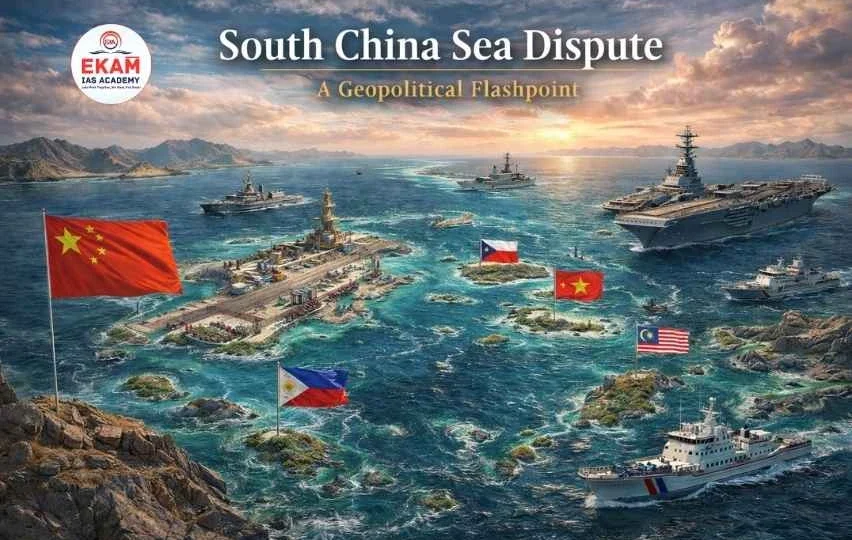
    When people hear about the South China Sea, the headlines often reduce the story to another confrontation between China and the Philippines. While that is currently the most visible flashpoint, the dispute is far more intricate. It is a convergence of international law, maritime strategy, economic security, military deterrence, and great-power competition.

    A Dispute Rooted in Competing Claims

    China asserts historical rights over a vast portion of the South China Sea through what is commonly referred to as the “Nine-Dash Line.” The Philippines, however, maintains that many of the contested waters and maritime features fall within its 200-nautical-mile Exclusive Economic Zone (EEZ), as defined under the United Nations Convention on the Law of the Sea (UNCLOS).

    In 2016, an international arbitral tribunal ruled that China’s historic claims, as represented by the Nine-Dash Line, have no legal basis under UNCLOS. Beijing rejected the ruling, arguing that the tribunal lacked jurisdiction and continues to assert its claims. This legal disagreement remains one of the central reasons why tensions persist.

    Why the South China Sea Matters

    The South China Sea is among the world’s most strategically valuable maritime regions.

    Approximately one-third of global maritime trade transits these waters each year. It serves as a crucial route for energy imports, manufactured goods, and raw materials connecting East Asia with Europe, the Middle East, and beyond. Any instability in this corridor has the potential to disrupt global supply chains, increase freight costs, influence energy prices, and create wider economic uncertainty.

    Beyond commerce, the region is believed to contain substantial reserves of hydrocarbons and supports one of the world’s richest fishing grounds, making it economically significant for all claimant states.

    The United States and the Strategic Equation

    The United States is not a claimant in the territorial dispute, yet it plays a pivotal strategic role.

    Washington maintains a Mutual Defense Treaty with the Philippines dating back to 1951. In recent years, U.S. officials have reiterated that an armed attack on Philippine armed forces, vessels, or aircraft operating in the Pacific, including the South China Sea, could trigger treaty obligations.

    This does not mean every confrontation will automatically result in military intervention. However, it significantly raises the geopolitical stakes, as even a localized incident could rapidly involve larger powers.

    China’s Strategic Imperative

    For China, the South China Sea extends well beyond economic interests.

    The region provides vital sea lines of communication through which much of China’s energy imports and international trade pass. It also forms an important component of Beijing’s maritime security strategy, allowing it greater operational depth for its naval forces and enhancing its influence throughout the Indo-Pacific.

    From Beijing’s perspective, maintaining a strong presence in these waters is closely tied to national security and long-term strategic interests.

    Taiwan: A Parallel Strategic Theatre

    Although Taiwan is geographically distinct from the South China Sea dispute, the two issues are increasingly interconnected within broader Indo-Pacific security dynamics.

    Taiwan is home to the world’s most advanced semiconductor manufacturing ecosystem. Companies based there produce a substantial share of the cutting-edge chips powering smartphones, artificial intelligence systems, data centers, automobiles, and defense technologies.

    Any major regional conflict—whether in the Taiwan Strait or the South China Sea—would likely have profound consequences for the global technology industry and international markets.

    Looking Ahead

    The South China Sea represents far more than competing territorial claims.

    It is a contest over maritime law, strategic influence, military deterrence, economic security, and the future architecture of the Indo-Pacific region.

    The challenge for all stakeholders will be preventing tactical confrontations at sea from escalating into strategic crises. Diplomacy, adherence to international law, and effective crisis-management mechanisms remain essential to ensuring that one of the world’s busiest maritime corridors does not become the epicenter of a wider geopolitical conflict.

    As tensions continue to evolve, the South China Sea will remain one of the defining geopolitical stories of the twenty-first century—not simply because of the waters themselves, but because of what they represent in the emerging global order.

  • Political Shift In UK

    Political Shift In UK

    The UK is entering a new political chapter at a time when its economy still faces significant structural challenges. Instead of viewing this only as Britain’s problem, India should view it as a strategic opportunity.

    The India–UK Free Trade Agreement should be more than just lower tariffs. It should become the foundation for joint manufacturing, technology partnerships, healthcare collaboration, infrastructure development, education, defence, and investment.

    Britain brings world-class finance, research, and innovation. India brings scale, skilled talent, manufacturing, and one of the fastest-growing economies in the world.

    The strongest partnerships are not built on dependency—they are built on complementing each other’s strengths.

    If approached with long-term vision, this could become one of the defining strategic alliances of the next decade.

    #India#UnitedKingdom#FTA#Economy#Trade#Manufacturing#Geopolitics#StrategicPartnership

  • A Political Earthquake in Washington?

    A Political Earthquake in Washington?

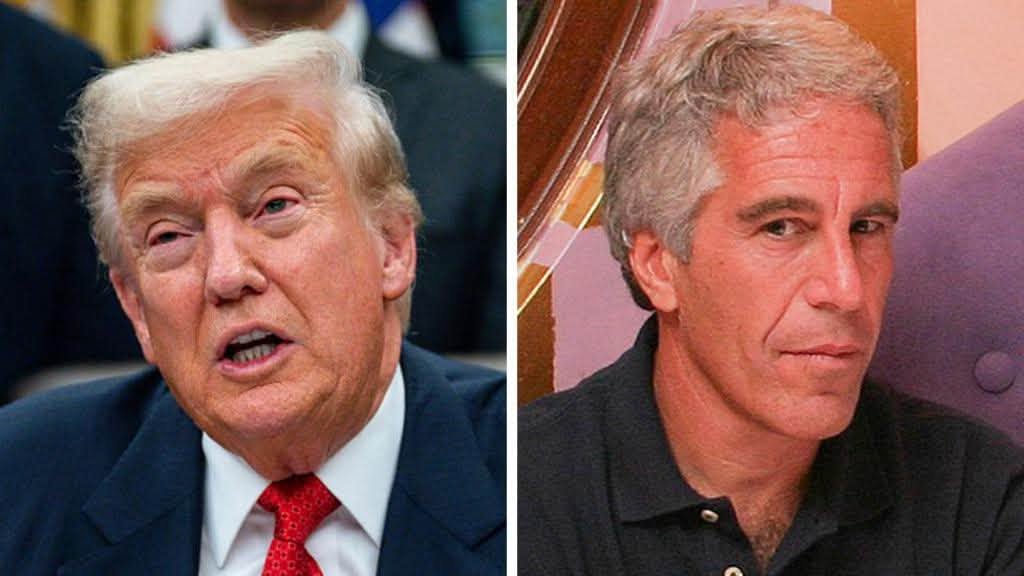
    For years, discussions about Jeffrey Epstein’s alleged intelligence links were largely confined to investigative journalists, independent researchers, and online speculation. Now, those questions have entered the highest levels of American politics.

    In a recent interview, U.S. Vice President JD Vance stated:

    “He clearly had connections to the highest levels of American intelligence. He clearly had connections to the highest levels of Israeli intelligence.”

    Whether one agrees with him or not, this is an extraordinary statement coming from a sitting Vice President. It is already fueling intense debate in Washington and beyond because it echoes claims that have long been disputed and remain unproven.

    The bigger question now is not simply what JD Vance said, but whether these remarks will lead to greater transparency, further investigations, or just another chapter in one of the most controversial scandals in modern American history.

    Sometimes, a single statement can reshape the political conversation.

    What do you think—will this change public perception of the Epstein case, or will it simply deepen the political divide?

    #JDVance#EpsteinFiles#USPolitics#Geopolitics#BreakingNews#CurrentAffairs#PoliticalAnalysis

  • Iran Claims U.S. Could Unlock $12 Billion in Frozen Funds Through Oil Sanctions Relief: What It Really Means

    Iran Claims U.S. Could Unlock $12 Billion in Frozen Funds Through Oil Sanctions Relief: What It Really Means

    A Potential Turning Point in Global Energy and Geopolitics

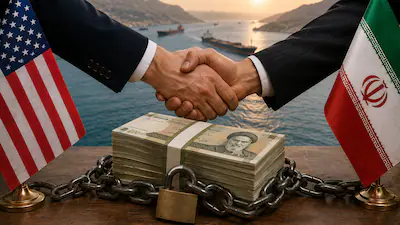
    Iran has indicated that the United States could release nearly $12 billion of Iranian funds currently frozen overseas if Washington proceeds with easing certain oil-related sanctions. While the headline may appear straightforward, the implications extend far beyond Iran’s economy. The development has the potential to influence global oil markets, regional diplomacy, inflation trends, and even the strategic balance of power in the Middle East.

    What Are Iran’s Frozen Funds?

    For years, billions of dollars generated from Iranian oil exports have remained inaccessible due to U.S. sanctions imposed on Tehran. These funds are largely held in foreign banks across countries that imported Iranian crude before sanctions tightened.

    Although the money legally belongs to Iran, sanctions have prevented unrestricted access, effectively freezing a significant portion of the country’s foreign reserves.

    Why Does Waiving Oil Sanctions Matter?

    Oil sanctions target Iran’s ability to export crude oil and receive payment through the international financial system. If the U.S. grants waivers or relaxes restrictions:

    • Iran could increase its oil exports significantly.
    • Frozen revenues could gradually become accessible.
    • Foreign buyers would gain greater confidence in purchasing Iranian crude.
    • Global oil supply could increase, helping stabilize prices.

    In simple terms, sanctions relief does not merely release money—it reopens economic arteries that have been blocked for years.

    The $12 Billion Question

    The reported $12 billion represents more than a financial windfall. For Iran, it means:

    ✔ Strengthening foreign exchange reserves

    ✔ Supporting domestic economic recovery

    ✔ Stabilizing the Iranian currency

    ✔ Financing infrastructure and development projects

    ✔ Improving import capacity for critical goods

    For investors and policymakers, the figure signals a possible shift in Washington’s approach toward Tehran.

    Impact on Global Oil Markets

    Iran possesses some of the world’s largest proven oil reserves. Any increase in Iranian exports can influence global energy dynamics.

    A larger Iranian supply could:

    • Reduce upward pressure on crude prices.
    • Increase competition among major oil exporters.
    • Affect production strategies of OPEC members.
    • Provide relief to energy-importing nations struggling with inflation.

    Energy traders will closely monitor any formal sanctions waiver because even modest

    changes in supply can move international oil benchmarks.

    The Geopolitical Dimension

    The issue is not purely economic.

    The release of frozen funds is closely linked to broader diplomatic negotiations involving regional security, nuclear concerns, and Middle Eastern stability.

    Supporters argue that economic engagement can create incentives for dialogue.

    Critics fear that additional financial resources could strengthen Iran’s regional influence and alter existing power equations.

    This is why every discussion involving sanctions relief becomes a complex mix of economics, diplomacy, and national security.

    What Investors Should Watch

    Several indicators will determine whether this proposal moves from rhetoric to reality:

    • Official U.S. policy announcements.
    • Changes in sanctions waiver frameworks.
    • Iranian oil export volumes.
    • OPEC responses.
    • Crude oil price movements.
    • Regional diplomatic developments.

    Any concrete agreement could have ripple effects across energy, shipping, banking, and commodity markets.

  • The True Measure of a Leader Is Not Power, But Character

    The True Measure of a Leader Is Not Power, But Character

    When we talk about leadership, especially of a nation as influential as the United States, we expect dignity, maturity, and a sense of responsibility in both words and actions.

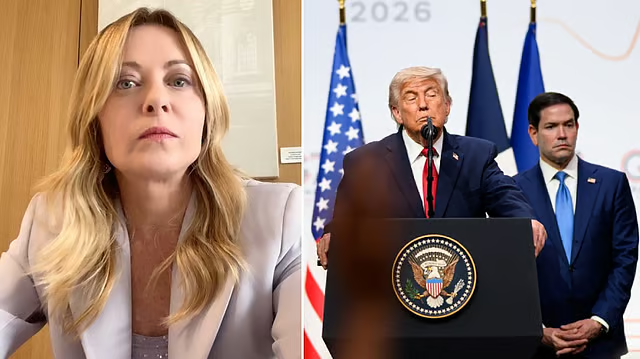
    The recent remarks by Donald Trump regarding Italian Prime Minister Giorgia Meloni, claiming that she “begged” for a photo at the G7 summit, were disappointing. Whether one agrees with a leader politically or not, public discourse between heads of government should be guided by respect and statesmanship.

    Great leaders earn admiration through humility, not by belittling allies. In moments like these, one expects measured words that strengthen international relationships rather than create unnecessary controversy.

    Leadership is not just about power; it is about character. And unfortunately, on that front, Donald Trump continues to disappoint many around the world.

    #G7 #Leadership #Politics #InternationalRelations